

Selling of assets by individuals: when will it attract cgt?

CMulder_04_A4Individuals who are residents for the purpose of the Income Tax Act, 58 of 1962, are liable for CGT (capital gains tax) on the disposal of South African and foreign assets. In addition, non-residents who dispose of immovable property in South Africa are liable for CGT as well.

As a disposal is the event that can trigger a taxpayer’s liability for CGT, it is important to know what type of transactions SARS will view as a disposal. The following actions are considered to be a disposal for CGT purposes:

  • Selling of an asset
  • Donating an asset
  • Destruction, scrapping or loss of an asset
  • Abandonment of an asset
  • Change in the use of an asset

Please note: The above actions are not a complete list of what constitutes a disposal. Please contact your tax adviser for more detailed information.

The rule of thumb is that if an asset is disposed of it will be subject to CGT, except if the capital gain/loss is specifically excluded. A capital gain/loss on any of the following disposals will not trigger CGT:

1. Disposal of a primary residence

The capital profit/loss on the disposal of a primary residence will not be taxable for CGT purposes if all the following requirements are met:

  • The proceeds are not more than R2 000 000, and
  • It is owned by a natural person (not by a company, close corporation or trust), and
  • The owner or his/her spouse normally lives in the house as their main residence, and
  • More than 50% of the house is used for private purposes.

It is also useful to know in which circumstances, upon disposal of a primary residence, a capital profit/loss, or a portion thereof, will be taxable for purposes of CGT. If any one of the following circumstances are present the capital profit/loss, or a pro rata portion thereof, will be taxable for CGT purposes:

  • If the proceeds is more than R2 000 000, the amount of the capital profit/loss exceeding R2 000 000 will be taxable.
  • When a property is bigger than 2 hectares, the portion of the capital gain/loss relating to more than the first 2 hectares, will be taxable.
  • Where a person or his/her spouse did not live in a primary residence for any period after 1 October 2001, the primary residence exclusion will not be allowed for that time period.
  • If any part of a primary residence was used for trade purposes (e.g. if you used your study to run a business from), the portion of the primary residence exclusion relating to the part of the primary residence used for business purposes will be taxable.

2. Disposal of personal use assets

The disposal of personal use assets which are owned by a natural person and not used for trade purposes, will not give rise to a liability for CGT. Some examples of personal use assets which are excluded for the purpose of calculating a potential CGT liability, are the following:

  • Personal belongings used more than 50% for personal purposes, for example a car, a caravan, an art collection or household furniture.
  • The capital gain/loss on the disposal of a boat up to a maximum length of ten metres and which was used for private/personal purposes.
  • Aircraft with an empty weight of 450 kilograms or less.

Please note: The above-mentioned circumstances is not a complete list of exclusions on the disposal of personal use assets. Please contact your tax adviser for more detailed information.

3. Disposal of an interest in a small business

The exemption of the capital gain/loss is limited to R1 800 000 if:

  • The gross asset value of the small business is less than R10 000 000, and
  • The individual is:
  • a sole proprietor or partner or has held 10% or more of the shares in the small business for five years or more, and
  • is at least 55 years old, and
  • suffers from ill-health or infirmity, or deceased.

4. Disposal of assets in a registered micro business, provided that the assets were used for business purposes

5. Receiving lump sum payments from certain approved retirement funds

6. Receiving the proceeds from certain endowment or life insurance policies

  • Second-hand policies are not excluded unless they are pure risk policies with no investment/surrender value.

7. Compensation received for personal illness or injury

8. Winnings and prizes from certain games and competitions e.g. Lotto winnings

Although the above exclusions are very specific, it is still possible to plan a transaction in such a way that will minimise the taxpayer’s liability for CGT. If you need more information on this topic, please do not hesitate to contact us for professional assistance and advice.

Reference List:

This article is a general information sheet and should not be used or relied on as legal or other professional advice. No liability can be accepted for any errors or omissions nor for any loss or damage arising from reliance upon any information herein. Always contact your legal adviser for specific and detailed advice. Errors and omissions excepted (E&OE)


Sale of immovable property and the national credit act

CMulder_04_A3It often happens during a sale of immovable property that the parties agree to a deferred payment of the purchase price. The purchaser will then pay the purchase price in installments and the seller will charge interest on the outstanding amount from time to time. Sometimes the parties even agree to the registration of a bond over the property to secure the payment of the purchase price.

What the parties don’t keep in mind, however, is that this agreement between the parties constitutes a credit transaction as defined in the National Credit Act (hereinafter called the Act) and that in certain circumstances the seller will have to register as a credit provider in terms of the Act.

To establish if the Act will be applicable and if the seller should register as a credit provider one should carefully consider the following:

  1. The Act will apply to all written credit agreements between parties dealing at arm’s length. This is probably to curb underhand dealings between family members at the peril of other third parties.
  1. Arm’s length transactions are not defined in the Act but they exclude, for example, transactions between family members who are dependent or co-dependent on each other and any arrangement where each party is not independent of the other and does not strive to obtain the utmost possible advantage out of the transaction.

The Act does not apply where:

  1. The consumer is a juristic person whose annual turnover or asset value is more than R1m;
  1. The purchaser is the State or an organ of the State;
  1. A large agreement (i.e. more than R250 000, such as a mortgage) is entered into with a juristic person whose asset value or turnover is less than R1m.

A credit agreement includes a credit facility, credit transaction and credit guarantee or a combination of these. The relevance is the following:

  1. A credit facility requires fees or interest to be paid;
  1. A credit transaction does not necessarily require interest or fees to be paid. An instalment agreement would suffice to qualify as a credit transaction.
  1. An instalment agreement is defined and relates only to the sale of movable property.
  1. A credit transaction also includes any other agreement where payment of an amount owed is deferred and interest or fees are charged.

A mortgage agreement qualifies as a credit transaction [Section 8(4)(d)] and the importance is that mortgage is defined in the Act as a pledge of immovable property that serves as security for a mortgage agreement. Mortgage agreement is also defined as a credit agreement secured by a pledge of immovable property.

Section 40 of the Act requires one to register as a credit provider should you have at least 100 credit agreements as credit provider OR if the total principal debt under all credit agreements exceeds R500 000. Principal debt means the amount deferred and does not include interest or other fees.

It follows that if you sell your home to an individual in a private sale (i.e. where he does not get a bond from the bank) and you register a bond as security, you have to register as a credit provider UNLESS the principal debt is less than R500 000 or the buyer is a juristic person and the price is more than R250 000.

The implications for the seller could be far-reaching if he is not registered, as the agreement will be unlawful and void, and a court must order that:

  1. The credit agreement is void as from the date the agreement was entered into;
  1. The credit provider must refund to the purchaser any money paid by the purchaser under the credit agreement, together with interest;
  1. All the purported rights of the credit provider under the credit agreement to recover any money paid or goods delivered to, or on behalf of the purchaser in terms of the agreement, are either cancelled or forfeited to the State.

The application form to register as a credit provider and also the calculation of the registration fee that is payable to the National Credit Regulator (NCR) can be found on the NCR’s website. If the seller has not registered by the time he enters into the loan agreement he may still register within 30 days after entering into the loan agreement.

Sellers, be careful when you enter into these types of agreements, as non-compliance with the Act could be a costly exercise.

This article is a general information sheet and should not be used or relied on as legal or other professional advice. No liability can be accepted for any errors or omissions nor for any loss or damage arising from reliance upon any information herein. Always contact your legal adviser for specific and detailed advice. Errors and omissions excepted (E&OE)

Tenant and landlord – what are your rights and obligations?

CMulder_04_A2Sandra would like to move into her own place but like many people she is unsure what a lease is and what responsibilities it will place on her. A lease agreement is defined as the agreement entered into between the tenant and the landlord for the leasing of a property. The lease agreement regulates the rights and obligations of both parties and protects the parties mutually.

The Rental Housing Act No 50/1999, as amended by the Rental Housing Amendment Act No 43/2007, regulates the relationship between a tenant and a landlord, even before commencement of the lease agreement.

The Act determines that the landlord may not discriminate against the prospective tenant, his family or friends, including on grounds of race, sex, pregnancy or marital status. This applies as early as placing an ad for the leasing of a property or even during negotiations between prospective tenants and the landlord.

The lease itself does not have to be in writing to be binding on both parties and should a tenant request that an oral agreement be reduced to writing, the landlord may not refuse the request.

A written lease agreement must contain the following information:

  1. The names of the parties, as well as their South African addresses;
  2. A description of the property being leased;
  3. The monthly rental payable and reasonable increases;
  4. The deposit payable, if applicable;
  5. The period for which the property will be leased. Should the agreement not mention a specific period of lease, the agreement must indicate the notice period required should one of the parties wish to terminate the contract;
  6. Any other consideration, besides the monthly rent, which may be payable;
  7. A complete list of defects that are present at the time that the parties entered into the lease agreement.

If the property is situated in a complex that has its own rules, a copy of those rules should be attached to the lease agreement. The landlord must ensure that he/she gives effect to the provisions contained in the lease agreement.

As mentioned, mutual rights and obligations are created for both parties in the lease agreement. These rights and obligations include the following:

Tenant’s rights:

  1. To jointly inspect the property before the tenant moves in and record any defects or damage to the property. This provision protects the tenant at the end of the lease period to ensure that the tenant will not be held liable for damages that already existed at the time the lease was entered into.
  2. During the lease period, the tenant has the right to privacy and the tenant's property, home or person may not be searched.
  3. If the landlord fails to inspect the property upon expiry of the lease, the tenant can assume that the landlord acknowledges that no damage has been done to the property, and that the full deposit, together with interest thereon, must be refunded to the tenant.

Landlord’s rights:

  1. To request a deposit, in the amount agreed upon between the parties, before the tenant takes occupation of the property.
  2. To receive timeous payment of the monthly rent and also to collect overdue payments, after a court order or order from a Tribunal has been obtained.
  3. To receive the property in a good condition upon termination of the lease.
  4. To jointly inspect the property within three days before the lease expires and determine if any damage has been done to the property for which the tenant should be held liable.
  5. To recover the cost of repairs, should the property be damaged, from the tenant.
  6. Should the tenant not give access to the property for a joint inspection before expiry of the lease, the landlord should inspect the property within seven days after expiry of the lease and utilise the deposit for necessary repairs. The balance of the deposit, if any, should be refunded to the tenant within twenty-one days.

Landlord’s obligations:

  1. To invest the tenant’s deposit in an interest-bearing account at a financial institution, with an interest rate equal to or higher than the interest rate at that time earned on a savings account at such financial institution. The tenant may request proof that the deposit is invested and the landlord may not withhold such evidence.
  1. To furnish the tenant with a receipt for each payment made by the tenant, which receipt should clearly describe the property, be dated, and indicate in full what the payment is made for (e.g. Rent for the month of February 2013, or deposit).
  1. To utilise the deposit to repair any damage to the property or to recover arrears rent after expiry of the lease, and to pay the balance together with interest earned thereon to the tenant within fourteen days after the expiry of the lease.
  1. To keep all receipts in respect of repairs done to the property which were deducted from the tenant’s deposit, and make such receipts available to the tenant.
  1. To refund the tenant's deposit together with interest thereon, within seven days of the expiry of the lease, in the event that no repairs are to be made to the property.

Should a dispute arise between the parties, the Rental Housing Tribunal in the area where the dispute arises, can be contacted.

It is very important for both the tenant and the landlord to make sure that their intentions are clearly defined in the lease and that they understand the terms of the lease before the lease agreement is signed. All provisions, responsibilities and obligations should also be clearly set out in the agreement. It is advisable to seek legal advice if any uncertainties arise, before the lease agreement is signed.

References:

Rental Housing Act No 50/1999, as amended by Rental Housing Amendment Act No 43/2007

This article is a general information sheet and should not be used or relied on as legal or other professional advice. No liability can be accepted for any errors or omissions nor for any loss or damage arising from reliance upon any information herein. Always contact your legal adviser for specific and detailed advice. Errors and omissions excepted (E&OE)

Trustees of body corporate not allowed to disconnect electricity or water supply to a section as a debt collection measure

CMulder_04_A12The default of levy payments is a frequent problem for the trustees of body corporates as well as the managing agent. It is the way in which the defaulting owner is treated and the outstanding debt collected, that will make the difference between a functioning, financially stable sectional title scheme or an impending disaster zone.

In these testing economic times, monthly levy payments are sometimes considered by owners of sectional title sections to be an optional expense in making ends meet on a tight budget. Once an owner has got away with defaulting on one payment, habitual default becomes easy, and more so if the trustees and management agent are slow to react to the failure to pay. The problem is worsened by the fact that the monthly levy is carefully calculated prior to the annual general meeting to be the minimum amount possible, in an attempt to accommodate the owners. However, these small monthly levies could easily accrue over a few months to a significant amount, aggravated by interest and reflected as a substantial outstanding debt.

These non-payers place severe financial restraints on the cash flow of a body corporate which is largely dependent on the timeous monthly payments by all its members to fulfil its monthly obligations to, inter alia, municipalities regarding water and common area electricity usage, security, and general upkeep of the property. If the body corporate does not have large financial reserves on which it can rely in the event of default by its members, the impact of the default can be severe and can cause unnecessary hardship for other owners. There are known instances of special levies raised in order to assist the body corporate in its financial hardship.

Many trustees and managing agents, in order to recover outstanding amounts, revert to taking the law into their own hands by cutting off the water and electricity supply to such members’ sections or units. Some have even passed rules which allow for such actions. Justifications for these actions by trustees and management agents are abundant, but none of these are legally sound or will stand in court.

By withholding the water and/or electricity supply to the section, whether or not it is allowed for in the rules, the trustees and management agent not only disregard the owner’s constitutional rights to access to water as well as the provisions of the electricity act, but also specific stipulations of the Sectional Title Act, Act 95 of 1986 as amended (“the Act”) and confirmed in case law. Such trustees and managing agents expose themselves and the trustees in their personal capacity, to an application by the owner and/or the occupier, against the spoliation of such services, or access with a court order for immediate re-connection. The body corporate or management agent may not interfere with water and electricity services rendered to a section or unit. The penalty will be a cost order, if not granted on a punitive scale, red faces, and a lot to answer to at the next annual general meeting.

The Act clearly stipulates in Section 37(2) that trustees must approach by action any court, including the Magistrate’s court, for recovery of any and all contributions levied under the provision of Section 37(1), which include monthly levies, special levies, interest, and legal costs on attorney and client scale.

The trustees and managing agent have no choice herein. Prompt debt collection action taken against any owner immediately on default, will be the best defence. Therefore the trustees must ensure that the appointed management agent either has a proven track record or a detailed collection policy prior to appointment of such agent. We all know that the wheels of justice turn slowly, and that it can take months for the default judgement to be granted and the warrant issued. By delaying the collection process the outstanding levy account increases exponentially, together with the burden on paying owners.

Therefore, the trustees themselves should keep a watchful eye on monthly payments and ensure that defaulting owners are immediately contacted by the management agent and, if they persist in the default, handed over to competent attorneys for collection. The sooner, the better. The old adage “absentee landlords gather no crops” is fitting, and trustees should ensure that the management agents attend to defaulters speedily and effectively in the interest of both their own property investment and that of the other owners in the sectional title scheme.

For further reading, see the judgement by Blieden J with Serobe AJ concurring in Queensgate Body Corporate vs MJV Claesen delivered on 26 November 1998 in the Witwatersrand Local Division, case number A3076/1998, and case law referred to therein.

This article is a general information sheet and should not be used or relied on as legal or other professional advice. No liability can be accepted for any errors or omissions nor for any loss or damage arising from reliance upon any information herein. Always contact your legal adviser for specific and detailed advice. Errors and omissions excepted (E&OE)

Validity of Antenuptial Contracts

img5One must be careful when drafting and signing an Antenuptial Contract. Aside from ensuring that the contents is all correct, one must also ensure that all the necessary provisions are contained therein to make the contract valid. The consequences of neglecting to do so may result in a marriage in community of property even though the parties had no intention of this at the time of their marriage.

Attorneys are often trusted with the task of drafting an Antenuptial Contract. This is a contract, which one signs to regulate the property regime of a marriage. If a couple does not sign, an Antenuptial Contract then the marital property regime will be that of in community of property. The presence of an Antenuptial Contract means that the marital property regime is that of out of community of property and the parties must specifically stipulate whether they would like the accrual system to apply to their marriage or not.

The importance of ensuring that all the necessary provisions are contained in the Antenuptial Contract to result in a valid contract was discussed in the 2014 Supreme Court of Appeal Case of B v B[1]. In this case, no values were stated in respect of any of the assets listed in the Antenuptial Contract and they were also not properly identified. In B v B the court stated that if the terms of a contract are so vague and incoherent as to be incapable of a sensible construction then the contract must be regarded as void for vagueness.[2]

According to Section 6(1) of the Matrimonial Property Act[3] ,a party to an intended marriage which does not, for the purpose of proof of the value of his or her estate at the time of the commencement of the marriage, declare the value in the contract, then he or she may do so within six months of the marriage in a statement attested to by a notary. If this is not done, according to Section 6(4) of the Marital Property Act, the net value of the estate of a spouse is then deemed to be nil at the time of the marriage. In effect, such a contract is valid but it will effectively render the marriage in community of property since nothing was excluded from the accrual.

However, if a contract is contradictory and incoherent in other respects then it cannot be seen as a valid contract since there is no certainty as to the meaning of the contract and what the parties seek to achieve. This means that the contract would not embody terms that would enable to court to give effect to the intention of the parties at the time the contract was concluded.

The result of such a contract is that the Antenuptial Contract would be void for vagueness and that the marital property regime would be the default position according to the Marital Property Act, which is in community of property.

Therefore, parties are encouraged to read their contracts thoroughly and ensure that they understand the terms thereof and that the contract embodies their intentions without any further explanations or evidence.

[1] (952/12) [2014] ZASCA 14 (24 March 2014).

[2] B v B (952/12) [2014] ZASCA 14 (24 March 2014) par 7.

[3] 88 of 1984.

This article is a general information sheet and should not be used or relied on as legal or other professional advice. No liability can be accepted for any errors or omissions nor for any loss or damage arising from reliance upon any information herein. Always contact your legal adviser for specific and detailed advice. Errors and omissions excepted (E&OE)
The interplay between the Consumer Protection Act and the National Credit Act, and the possibility of penalties with early settlement of credit agreements

shutterstock_303691415Mr Black buys a BMW car in terms of a hire purchase agreement and the financing is done through BMW Finance. After a few months Mr Black inherits a huge sum of money and decides that he wants to settle the outstanding amount. Mr Black’s concern is whether the credit provider is entitled to charge a penalty fee for early settlement of the outstanding finance amount.The first step in answering the abovementioned question will be to determine which laws regulate the situation. The legislation that applies here will be the National Credit Act 34 of 2005 and the Consumer Protection Act 68 of 2008.

In the above scenario a distinction should be drawn between the scope of each of these Acts, as the one pertains to the credit agreement itself and the other to the goods, being the BMW car. Section 5 of the Consumer Protection Act lists the situations in which this Act will apply. Section 5(2)(d) is of particular interest to Mr Black as it excludes credit agreements which are regulated by the National Credit Act. However, the goods or services provided in terms of the credit agreement are included and will be regulated by the Consumer Protection Act, whereas credit agreements as contemplated in the National Credit Act, specifically section 8(4)(c), includes hire purchase agreements (instalment agreements) in the ambit of the National Credit Act.

Mr Black’s situation illustrates the position as stated in Article 5(2)(d) of the Consumer Protection Act. The implication of this section is that all credit agreements that are subject to the National Credit Act will be governed by the National Credit Act, but the goods and services in terms of the agreement will fall within the scope of the Consumer Protection Act. It is here that the above acts overlap with each other. The overlap actually lies in that both acts can apply to one agreement. The credit agreement must comply with the National Credit Act, but the goods and services must comply with the Consumer Protection Act. If there is a defect in the quality of the goods or the service the Consumer Protection Act will provide the appropriate remedy, but if it is about the credit agreement itself, then the National Credit Act will apply.

Section 2(9) of the Consumer Protection Act deals with the interpretation of the Act and more specifically on how the law has to be interpreted in cases where there are discrepancies between the Consumer Protection Act and any other law. The Consumer Protection Act should be read in harmony with other legislation as far as possible, but if it is not possible, then the law that offers the most protection to the consumer shall apply.

The two sections in the National Credit Act which deals with the early settlement of credit agreements are sections 122 and 125 of the Act. According to section 122 of the National Credit Act, a consumer may terminate the credit agreement at any time. The consumer can do this by paying the settlement amount as calculated in accordance with section 125 of the National Credit Act.

Section 125 states that a consumer is entitled to cancel a credit agreement at any time with or without prior notice to the credit provider. The settlement amount will be the sum of the following amounts:

l The outstanding balance of the principal debt / capital amount.

l All rates and charges up to and including the settlement date. For example, if the outstanding amount can be settled after 3 months, then 3 months' interest would be charged. The interest will be calculated on the principal amount borrowed.

In the case of a large credit agreement (R250 000.00 or more) the outstanding amount will be calculated as above, but with additional interest, known as an early settlement fee. The fee may not exceed an amount equal to three months' interest on the capital amount.

Conclusion:

Therefore, if the BMW that Mr Black bought was worth more than R250 000.00 the credit provider will be entitled to charge a penalty fee of not more than 3 months' interest on the capital amount. In the event that the purchased item's worth is less than R250 000.00 the credit provider will not be entitled to charge a penalty fee.

This article is a general information sheet and should not be used or relied on as professional advice. No liability can be accepted for any errors or omissions nor for any loss or damage arising from reliance upon any information herein. Always contact your legal adviser for specific and detailed advice. Errors and omissions excepted. (E&OE)

Insolvency and voluntary sequestration

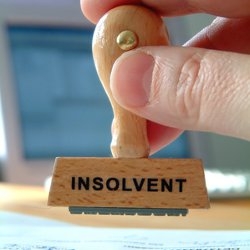
insolventa-anp6The term “insolvency” relates to both sequestration (for individuals and trusts) and liquidation (for companies and close corporations). Sequestration can either be effected by voluntary sequestration or compulsory sequestration. This article will deal with voluntary sequestration, where the person applying to the Court for sequestration is the insolvent individual himself/herself.

What does “insolvent” mean?

If someone is insolvent (bankrupt), the amount of his debts are more than the value of his assets and income, and he is unable to pay his creditors (a creditor is a person or business he owes money to).

How does voluntary sequestration work?

When a person becomes insolvent, she can apply to the Court for her estate to be sequestrated. There are, however, three requirements that she will have to meet before the Court will allow her estate to be sequestrated:

  1. She must prove that her debts are actually more than the value of her assets.
  2. She must have enough assets to pay the costs of the sequestration application.
  3. She must prove that the sequestration will benefit the persons and/or businesses she owes money to i.e. they must get paid (at least something) if her estate is sequestrated.

If the Court grants permission for sequestration, it will appoint a trustee/curator by court order who must manage the insolvent estate to the equal benefit of all the creditors.

The trustee/curator will sell her assets and use the money to pay her creditors. If the money from the sale of her assets is not enough to pay all creditors in full, the money will be divided pro rata between the creditors based on the amount owed to each creditor and the order of preference of payment. Any outstanding debt that remains thereafter will be written off by the creditors.

What happens when the voluntary sequestration process has been completed?

The insolvent person can start over with no debt to his name. This makes it sound as if a person can make debt, then apply for voluntary sequestration and walk away without paying his creditors. However, being sequestrated does have disadvantages.

What are the disadvantages of voluntary sequestration?

The following disadvantages should be considered before applying for a voluntary sequestration:

  1. The sequestrated person’s credit record will get a blow as he/she will be blacklisted at credit bureaus and lose their creditworthy status.
  2. The sequestrated person can’t borrow money or incur any other debt until he/she is rehabilitated.

The sequestrated person will qualify as being rehabilitated when declared as such by the Court, which can happen four years after the sequestration date or sometimes sooner. If the Court does not declare the sequestrated person rehabilitated, he/she will automatically become rehabilitated ten years after his/her sequestration date.

3. If a person’s estate is sequestrated, it may lead to prohibition of membership of certain professional bodies until he/she is rehabilitated, or even future exclusion from certain professions.

Who may apply for voluntary sequestration?

  1. In the case of a natural person becoming insolvent, the person himself/herself may apply, or his/her representative.
  2. Where spouses are married in community of property, both spouses must apply for voluntary sequestration at the same time.
  3. The partners in a partnership who are resident in South Africa or their representative may apply for voluntary sequestration.
  4. When a deceased estate is insolvent, the executor of the estate may lodge an application for voluntary sequestration.
  5. The curator (curator bonis) of an estate where the individual is unable to handle his/her own affairs e.g. if the individual is mentally unfit.
  6. An insolvent trust.

Voluntary sequestration is not the panacea it appears to be at the surface. Although it might be a solution for the financial problems of an insolvent person, there is a price to pay in terms of losing a creditworthy status and/or a profession together with a good reputation which might have taken years to build up.

The decision to apply for voluntary sequestration should not be taken lightly and should only be used as a last resort after all other possible avenues have been exhausted.

Should you need more information on insolvency and voluntary sequestration, please contact your legal advisor.

This article is a general information sheet and should not be used or relied upon as professional advice. No liability can be accepted for any errors or omissions nor for any loss or damage arising from reliance upon any information herein. Always contact your financial adviser for specific and detailed advice.

Reference List:

This article is a general information sheet and should not be used or relied upon as professional advice. No liability can be accepted for any errors or omissions nor for any loss or damage arising from reliance upon any information herein. Always contact your financial adviser for specific and detailed advice. (E&OE)


How to manage your debt

CRO_money_debt_collection_11-13Alecia had big financial problems; she had too much debt and her expenses outweighed her income. She decided to open a new bank account into which her salary could be paid, which would ensure that she could manage her salary before her monthly debit orders went off.

Alecia thought it would be a good idea to pay her small debts off first and then begin with the larger debt. Unfortunately this resulted in her not making any payments at all on her home loan and credit card and the bank threatened to blacklist her and sent her a summons.

If Alecia had known about debt counselling sooner she would not be stuck in the position she is now facing. It is important to educate people about debt counselling, especially in a country where debt is granted so easily and yet so hard to pay back. Debt counselling is a process of assisting consumers that are experiencing debt-related problems and are having difficulty making their current monthly payments, by providing budget advice, restructuring their payments, negotiating on their behalf with credit providers, monitoring their payments and providing aftercare services.

It is the duty of the Debt Counsellor [who is registered with the National Credit Regulator (NCR)] to assess whether the consumer is over-indebted by weighing the income and expenses and then taking into account statutory and non-statutory deductions as well as existing monthly debt payments. If the calculation results in a negative balance, the consumer is declared over-indebted. The debt counsellor provides a proposal that lowers the debt payments and increases the cascades (the number of months allowed for repayment of the debt, inclusive of interest), in order for the consumer to be able to manage his debt while paying it off at the same time. An order is then granted in court and sent to the credit providers, and the consumer can no longer incur any new debt. Once the debt is paid off, the consumer is given a clearance certificate and he/she has all that extra income to buy goods in cash.

Unfortunately, it was too late for Alecia as legal action was already taken against her. The same applies if a termination letter is sent in terms of s.129 of the National Credit Act. It is important for people to know that there is a way to manage their debt, but they need to acknowledge that they are in financial trouble before they are placed in a situation like Alecia. It may be too late for Alecia, but hopefully it won’t be too late for others.

This article is a general information sheet and should not be used or relied on as legal or other professional advice. No liability can be accepted for any errors or omissions nor for any loss or damage arising from reliance upon any information herein. Always contact your legal adviser for specific and detailed advice. Errors and omissions excepted (E&OE)

Are there limitations on ownership rights?

property-line-dispute-getty_ebcd9a0e9da5517cbd147ab14f732a5a_3x2_jpg_300x200_q85It is a recognised principle of property law that ownership does not confer absolute and unlimited entitlement on the owner, but that various limitations exist in the interest of the community and for the benefit of other people.

The most important limitation on the owner in the interest of the community as a whole is the payment of taxes to the state in respect of certain movable and immovable property. In the case of immovable property several measures make land available to a larger section of the community, which implies that the restitution of land rights and the provision of land will require measures for expropriation. Furthermore, a number of provisions deal with environmental conservation and physical planning which limit the owner’s entitlement in the interest of the community. Limiting measures in the case of moveable property prohibit the use of such property to the detriment of the community, for instance motor vehicles, fire-arms and dependence-producing substances.

There are also measures which limit the owner’s entitlement, not in the interest of the community, but in the interest of other individuals. The best known example in this case is neighbour law, which implies that the owner may not use his land in such a way that it constitutes an unreasonable burden on his neighbours. The criterion of reasonableness determines that, in these circumstances, the owner of immovable property may exercise his entitlements within reasonable bounds, and that the neighbouring owner or occupier must tolerate the owner’s exercise of his entitlements within reasonable bounds.

Other examples of the application of the criterion of reasonableness in the case of neighbour law are the obligation to lateral and surface support, measures dealing with encroachments, the mutual obligation regarding the natural flow of water and the elimination of danger.

Other people besides the owner may acquire entitlements (for instance use rights) in respect of the moveable or immovable property of the owner. Holders of limited real rights acquire entitlements in respect of the asset, which limits the owner’s ownership (dominium) as they burden the property. It is therefore enforceable against the owner and his successors in title. Certain creditors’ rights may also result in people acquiring entitlements in respect of the owner’s property. These rights are, however, only enforceable against the owner personally and do not burden the property as such, therefore it is not enforceable against successors in title.

This article is a general information sheet and should not be used or relied on as legal or other professional advice. No liability can be accepted for any errors or omissions nor for any loss or damage arising from reliance upon any information herein. Always contact your legal adviser for specific and detailed advice. Errors and omissions excepted (E&OE)

Contracting with minors in a digital context

BP0AWX Boy using iPhone

In this article, we examine whether contracts entered online by minors, using their parents’ credit cards, are legally binding in the specific context of social media such as Facebook.

Both Common law and legislation deal with the capacity of minors who enter into different types of contracts. According to the Children’s Act, 38 of 2005 a minor is a person between the ages of seven and 18 years. In terms of common law a minor does not have sufficient capacity to incur binding obligations under a contract and must obtain the assistance or consent of their guardian to do so. This consent can be given before the contract is concluded or thereafter, in which case it is seen as ratification of the contract. There are exceptions to this rule, which may be found in various pieces of legislation as well as in common law, such as contracts where the minor obtains only rights and no duties (e.g. a donation).

A minor can escape liability even when they have been bound in terms of the contract (i.e. where the guardian has assisted the minor in the conclusion of the contract, consented to or ratified the contract). This can be done where the contract was prejudicial to him or her at the time that it was concluded. The court may then, on application, set the contract aside and order that each party be placed in the same position as what they were in before the contract had been concluded.

Facebook is currently involved in an ongoing class-action lawsuit. In this lawsuit, a class of parents in America are pressing their claim that Facebook should change how it handles online transactions by minors.

Attorneys for the parents in the above case note that it is important that Facebook has knowledge of a user’s actual age but still treats children the same as adult users when it comes to taking their money.

One of the biggest issues here is that reciprocal performance, being the payment of money via credit or debit card and the child obtaining credits, takes place almost immediately. Therefore, if the parent were to be refunded, the minor would be unjustifiably enriched using the credits.

The system, that Facebook currently employs, is therefore problematic since it takes advantage of children who may not fully understand the contracts that they are entering into when they purchase game credits. Furthermore, should the parents be immediately refunded in the current system, it may lead to situations where the parent consents to the purchases and then after the child obtains the enjoyment from the credits, request that their accounts be credited due to a ‘lack of consent’.

It is therefore clear that this system of payment should be changed. We should obtain clarity on how to deal with this in South Africa once the class-action suit in America has been concluded and a solution has been reached. At present, it seems that there will be no alternative for parents whose children overspend or use their credit or debit cards, without permission. If your child has, a Facebook gaming habit it is a good idea to keep a close eye on your wallet until we have clarity on the recourse available to parents who find themselves in this situation.

Bibliography

This article is a general information sheet and should not be used or relied on as legal or other professional advice. No liability can be accepted for any errors or omissions nor for any loss or damage arising from reliance upon any information herein. Always contact your legal adviser for specific and detailed advice. Errors and omissions excepted (E&OE)